
Cucurbits
Cucurbits are thought to be one of the first types of plants to be cultivated in history. They are thought to be originally cultivated in the region of present-day Mexico and Central America. Squash, zucchini, cucumber, and bottle-bitter-snake gourd are all cucurbits!

Maximizing Cucurbit Yield
Most cucurbits can grow to a big size, but it’s best to pick the fruits when they are at a medium size to get the best taste and texture.
Water at the base of your plant to prevent diseases like powdery mildew. It may be a little difficult once the gourd grows larger, but it is essential in preventing diseases that might kill the plant and surrounding plants.
For climber varieties, you can train a long gourd to grow straight, not curly, by tying a rock to the end . They should also not touch the ground, for the fruit will have a flat side rather than a round shape throughout.
There are also bush and non-climber varieties, which are especially suitable if you have a small garden.
Direct sowing is better than transplanting cucurbits. Cucurbits have complex root systems, so direct sowing can benefit their root system’s development and reduce transplant shock.
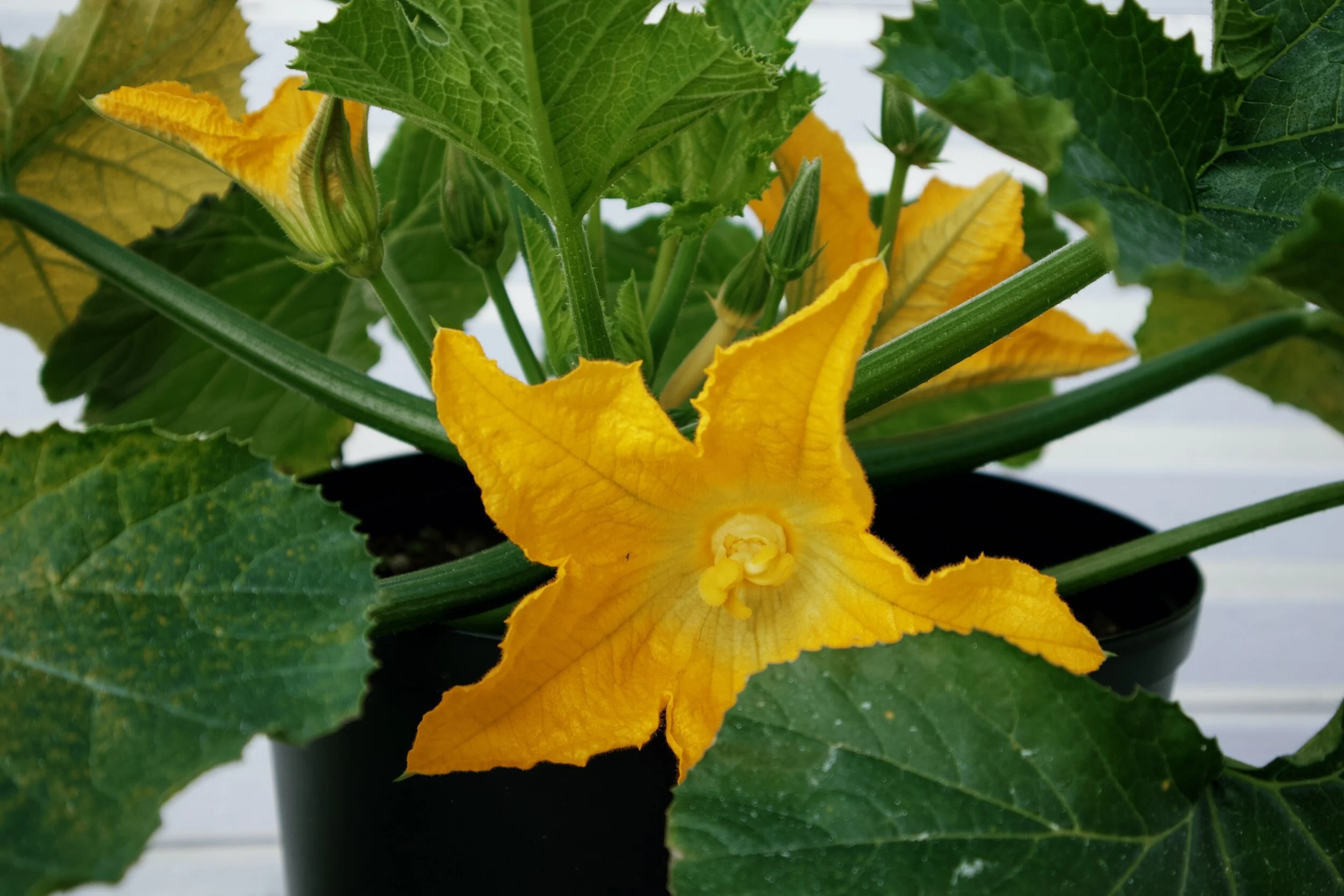
Bush varieties (non-climber) can be grown in pots.
Spacing between the plants, air circulation, fitting temperatures, watering techniques, and crop rotations
are important in preventing diseases and pests.
Pests and Disease:
A pest that affects most cucurbits is the cucumber beetle. They are yellow or green and have black stripes or spots. Row covers and handpicking are effective in managing a small infestation, while using neem spray and peppermint repellant can help with large infestations.
A disease that affects most cucurbits is powdery mildew. This fungal disease is white or gray, covering all of the plant's leaves and stems. The disease can inhibit photosynthesis, leading to poor fruit development.
References: Unsplash, All About Gardening, Almanac, Kid’s Gardening, Aces, MiracleGro, Eartheasy
Cucurbits Info Chart

When to Harvest (may depend on variety):
Squashes & Zucchini: Fruit feels firm
Cucumbers: Fruit feels firm and has a dark green color
Bottle Gourd, Bitter Gourd & Snake Gourd: Vine at the base of the gourd starts to dry up, and the gourd’s begins to dull